Why Progress Feels Invisible (Even When It Isn't)
It often starts with something small.
A plan for a slow Saturday morning. A sense that, just for a few hours, nothing urgent is required.
And then reality intervenes.
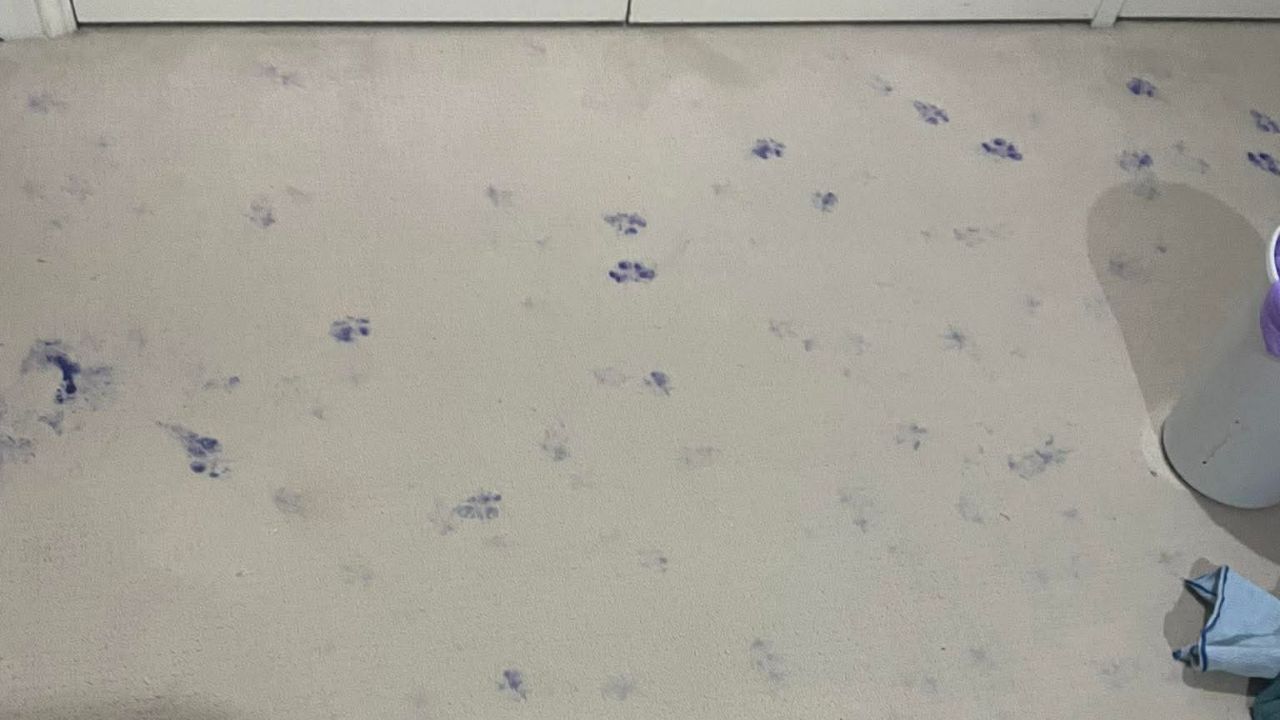
In my case, it was a Golden Retriever, a purple permanent marker, and a bedroom carpet that didn’t stand a chance.
A few hours later, after scrubbing and patience and a quiet level of determination I didn’t know I had that early in the morning, the result was clear: it wasn’t perfect, but it was significantly better.
Most of the damage was gone. What remained was manageable. You no longer had to actively play hopscotch to avoid stepping on it.
It felt like progress. Real progress.
Until I stepped out of the room and came back.
Because when I returned, something had shifted.
Not the carpet.
My perception of it.
Where I had just seen improvement, I now saw only the one stain that wouldn’t lift. The worst one that oozed ink every time I dabbed. The one that resisted every attempt to fix it.
And within seconds, my experience changed.
From: this is actually pretty impressive
To: this is terrible
Nothing about the outcome had changed.
Only what I was comparing it to.
The Subtle Shift That Changes Everything
This is the part most people miss.
The shift doesn’t feel dramatic. You don’t consciously decide to change the standard.
You just… do.
You stop measuring from where you started and begin measuring from where you think you should be by now.
And in doing that, you erase the middle.
You erase the effort, the movement, the decisions, the discipline.
You collapse everything into a single question: Why am I not further ahead?
Or judgement: You should be further ahead!
This is where progress becomes invisible.
How This Shows Up in Business
This pattern is everywhere in high-achieving women, particularly those building businesses…
You grow revenue, but immediately focus on the gap to your next target.
You sign a new client but immediately focus on the ones that are yet to commit.
You make some major decisions but immediately highlight the ones still needing your attention.
From the outside, there is clear movement.
From the inside, it feels like nothing is working.
Not because progress isn’t happening.
But because the reference point has shifted. You shifted it.
Why Traditional Productivity Advice Doesn’t Solve This
Most conventional advice assumes the problem is a lack of structure, discipline, or efficiency.
So the solution becomes:
- Better planning
- Clearer goals
- More consistent habits
- Improved time management
And while those things can be useful, they don’t address what’s actually happening here.
Because this isn’t a productivity issue.
It’s a perception issue.
You can be executing well and still feel behind.
You can be making meaningful progress and still feel like it’s not enough.
If your standard keeps moving faster than your ability to register progress, no system will fix that.
You’ll just become more efficient at feeling dissatisfied.
The Real Cost of Always Measuring Against “Not Yet”
When your attention is anchored to what hasn’t happened yet, a few things begin to unfold:
You lose access to momentum.
Because momentum relies on recognising movement.
That’s the pre-requisite for momentum.
You erode trust in your own decision-making.
Because nothing ever feels complete or sufficient.
You stay in a constant state of low-grade pressure.
Because there is always something missing or needing to be done.
And perhaps most importantly, you disconnect from the reality of what you are actually building.
Not the imagined version.
The real one.
Where you’re making progress.
AND you still have more progress to go.
A More Accurate Way to Measure Progress
The shift here is simple, but not automatic.
Deliberately returning to a more grounded reference point.
Instead of asking:
Why am I not further ahead?
Ask:
What has actually changed?
Not in theory. Not in potential. In reality.
What decisions am I making now that I wasn’t making before?
What problems am I no longer tolerating?
What feels easier, cleaner, or more direct?
Where have I created space that didn’t exist six months ago?
This isn’t about forced gratitude or trying to “stay positive.”
It’s about accuracy.
Because when you measure from a moving, imagined standard, you distort the picture.
If you cannot see what has already been done, you will always feel behind - no matter how much you achieve.
A Final Thought
Progress doesn’t disappear.
It becomes invisible the moment the standard shifts.
And if you are in a season where things feel like they’re not working, or not enough, it’s worth asking:
Has the reality stalled?
Or have I quietly moved the reference point?
Because those are two very different problems.
And only one of them requires you to do more.
If This Resonates
This pattern - where urgency, pressure, and a constant sense of “not enough” persist despite real progress - is something I explore deeply in my work.
If you’re building something meaningful but want to do it in a way that feels sustainable, clear, and grounded, you can explore more of my thinking or enquire about working together.