Business Owner Burnout? Check These 3 Blind Spots First
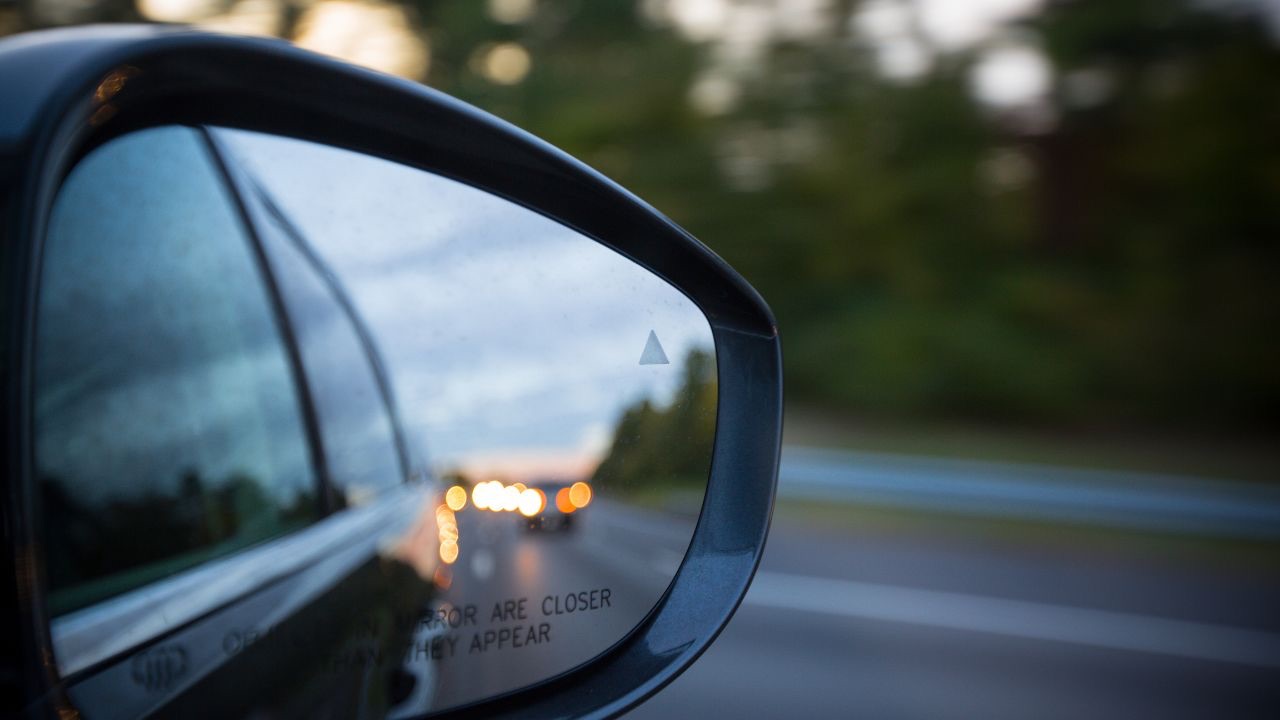
I nearly hit a cyclist whilst driving last week.
The cyclist was in my blind spot. I couldn't see him for a couple of seconds, and those seconds were crucial - for his life and my well-being.
Fortunately, my car beeped and screamed at me and slammed on my brakes just in case I wasn't listening.
This got me thinking about blind spots. And the problem with them.
You have to know that you have a blind spot to be able to check it…
If you're like me, you can't see your blind spots. That's why they're called blind spots 😉.
The Blind Spots We Don't Talk About in Business
We talk a lot about strategy in business. Market positioning. Ideal client avatars. Revenue goals. Marketing funnels.
But we don't talk nearly enough about the invisible beliefs and patterns that sabotage all of that before it even has a chance to work.
I spent my first two years in business working harder than I'd ever worked in corporate. Longer hours. More tasks. Constant hustle.
And I had almost nothing to show for it except exhaustion and a growing sense of panic that maybe I'd made a terrible mistake leaving my legal career.
The problem wasn't my work ethic. It wasn't my intelligence. It wasn't even my strategy.
The problem was I couldn't see what I couldn't see.
Blind spots are dangerous when you're driving. They're equally dangerous - maybe more so - in your business.
Because at least in your car, you know to check your mirrors. You know blind spots exist. You've been trained to look for them.
In business? Most of us are driving blind and calling it dedication.
My Three Biggest Business Blind Spots (And the Damage They Caused)
I don't know how many times my coach zeroed in on one of my blind spots when I began my business. Each time, I genuinely had no idea I was doing it.
Here are the three that nearly destroyed everything I was trying to build:
1. "I'll rest when I've got it finished."
This one sounds so reasonable, doesn't it? So responsible. Just get this launch done. Just finish this client project. Just get through this busy season.
But here's what I couldn't see: I kept pushing back the finish line because there was always one more thing.
'Finished' had become a moving target that I created to justify never stopping.
I'd complete a launch and immediately start planning the next one. I'd finish a client intensive and immediately fill the space with admin tasks I'd been putting off. I'd reach a revenue goal and immediately raise it.
There was never going to be a "finished" because I was addicted to the chase. To the productivity. To the feeling of accomplishment that came from crossing things off lists.
Rest wasn't something I was postponing. It was something I was actively avoiding because I didn't know who I was without the work.
Where this led me: I never took a break and felt exhausted and on the cusp of burnout. I couldn't see my addiction to work - I genuinely believed I was being responsible and disciplined, not realising I was running on fumes and calling it dedication.
My body started giving me warning signs. Tension headaches. Disrupted sleep. An over-functioning brain that never wanted to switch off.
But I ignored all of it because in my mind, this was just what building a business required.
2. Using busy work to feel good.
This one is insidious because it masquerades as productivity.
I was drowning in tasks. Tweaking my website. Reorganising my file system. Researching new marketing strategies. Taking courses. Updating my email templates. Perfecting my client onboarding process.
All of it felt productive. All of it felt necessary. All of it kept me busy from morning until night.
But none of it was actually building my business.
I was confusing activity with achievement. I thought my goal was to grow my business, but that goal was being undermined by my 'secret' goal - to feel productive.
Because here's the truth I couldn't see: actually growing a business requires doing uncomfortable things. Sales conversations. Putting yourself out there. Sharing your work publicly. Asking for the sale. Following up with potential clients.
All the busy work? That was just elaborate procrastination wrapped in the language of professionalism.
Where this led me: No growth in my business despite working really hard. I had nothing to show for all those hours except exhaustion and a perfectly organised Dropbox folder.
So I worked even harder because I thought that was the answer. More hours. More tasks. More optimisation.
I couldn't see that the real problem was I was busy being busy, not busy building.
The revenue stayed flat. The client roster stayed the same. And I started to panic that maybe I just wasn't cut out for entrepreneurship.
3. "If I'm not struggling, I'm not working hard enough."
This is one is hard to admit.
I could not comprehend that work could be easy. I had trained myself - through years of corporate culture, hustle messaging, and my own worthiness wounds - to believe that real work = suffering.
Ease felt like cheating. Flow felt suspicious. Enjoyment felt like I was being lazy.
So what did I do when something started feeling easy?
I sabotaged it.
Where this led me: I actively avoided or sabotaged anything that started feeling easy or flowing well.
If a client engagement felt effortless - if the chemistry was great, if the work came naturally, if I left sessions energised instead of drained - I'd assume I wasn't working hard enough. Clearly if it was this easy for me, it must not be that valuable.
If I finished my work early, I'd create more tasks to fill the time. Because leaving work at 3pm felt irresponsible, even if I'd accomplished everything that actually mattered.
If I found myself enjoying the process, I'd question whether I was taking it seriously enough.
I was literally punishing myself for efficiency. For alignment. For doing work that suited my strengths.
And in the process, I was training myself to seek out struggle.
To manufacture difficulty.
To make everything harder than it needed to be.
Because at some deep level, I believed that if it wasn't hard, I hadn't earned it.
What I Learned About Blind Spots (The Hard Way)
Here's the thing about blind spots: you can't check your own while you're driving.
You need someone outside the car to tell you what you can't see.
I could have stayed stuck in those patterns for years - decades even - because from my perspective, I was doing everything right. I was working hard. I was being responsible. I was taking my business seriously.
I couldn't see that my definition of "hard work" was destroying me. That my version of "responsible" was keeping me stuck. That my idea of "serious" was making everything unnecessarily difficult.
That's what coaching does. It shows you the patterns you're too close to notice. The beliefs you think are facts. The habits you've dressed up as strategy.
My coach didn't tell me to work harder. She showed me where I was working hard at the wrong things.
She didn't tell me to be more disciplined. She showed me where my discipline was actually self-sabotage.
She didn't tell me to take my business more seriously. She showed me where my seriousness was sucking all the joy and sustainability out of what I was building.
The Questions That Changed Everything
Once I could see these blind spots, I had to face some uncomfortable questions:
What am I really building here? Not the surface answer. Not "a successful coaching business." But really - what am I trying to create? And more importantly, who am I trying to prove something to?
What is this work style costing me? Not someday. Not theoretically. Right now, today, what is this approach to work taking from me? From my relationships? From my health?
From my actual life?
What would change if I believed ease was evidence of alignment, not laziness? What would I do differently? What would I stop doing? What would I finally let myself try?
These weren't easy questions to sit with. Because the answers required me to admit that a lot of what I'd been calling "building a business" was actually just recreating the same toxic patterns I'd left corporate to escape.
If This Sounds Familiar...
Maybe you're reading this and recognising yourself in one - or all - of these blind spots.
Maybe you're working harder than you've ever worked and wondering why you're not seeing the results you expected.
Maybe you're exhausted but convinced that's just what it takes.
Maybe you've been telling yourself "just get through this busy season" for the last three years.
Maybe you're starting to resent the business you built to give you freedom.
If any of that resonates, here's what I want you to know:
It's not a strategy problem. It's a seeing problem.
You can't fix what you can't see. And you can't see what's in your blind spot.
What to Do Right Now
Pick one of those three blind spots above. The one that made you go "ouch, that's me."
Now ask yourself: What's this costing me right now? Not someday. Today.
Be specific. Not "my health" but "I snapped at my partner last night because I'm running on five hours of sleep." Not "my business growth" but "I've been tweaking my website for two months instead of having sales conversations."
That little twinge of recognition? That's a red flag. Don't ignore it.
Because here's what I know after years of doing this work with hundreds of clients:
The hardest working women I know are often working hard at exactly the wrong things. They're disciplined, dedicated, and driving themselves into the ground while their businesses stay stuck.
Not because they're not smart enough or strategic enough.
But because they can't see the patterns that are keeping them there.
The Bottom Line
You didn't leave your career to recreate the same exhausting, unsustainable patterns.
You wanted freedom. Flexibility. The ability to do work that matters on your own terms.
But if you're running yourself ragged, drowning in busy work, and punishing yourself every time something feels easy?
You're not building a business. You're building a cage with better décor.
And the only way out is to see what you can't see on your own.
And if you're ready to stop driving blind, let's talk. Because the view is so much better once you can actually see where you're going.
Book a free strategy call HERE.
About the Author: Tricia is a Master Certified Life Coach and former lawyer/corporate executive who helps hardworking female business owners transform from overwhelmed "taskmasters" to strategic CEOs. Through her signature "Taskmaster to CEO Transformation" program, she guides ex-professionals to achieve success without sacrificing their well-being or family relationships.